BLACK FRIDAY IS HERE! ✦ 20% OFF EVERYTHING · Shop the Sale →
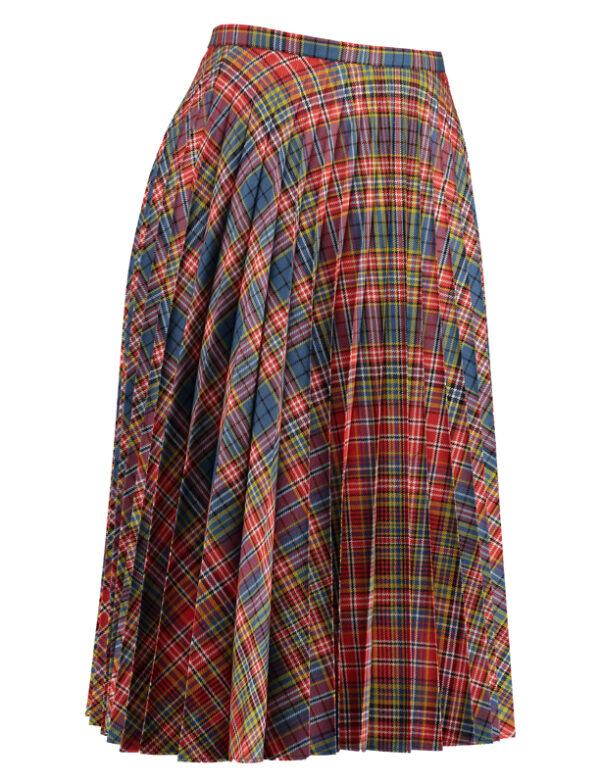
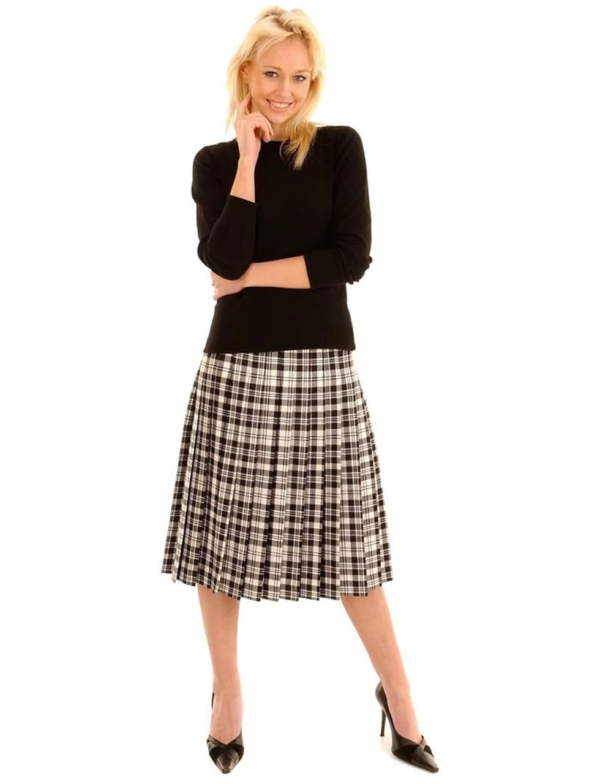
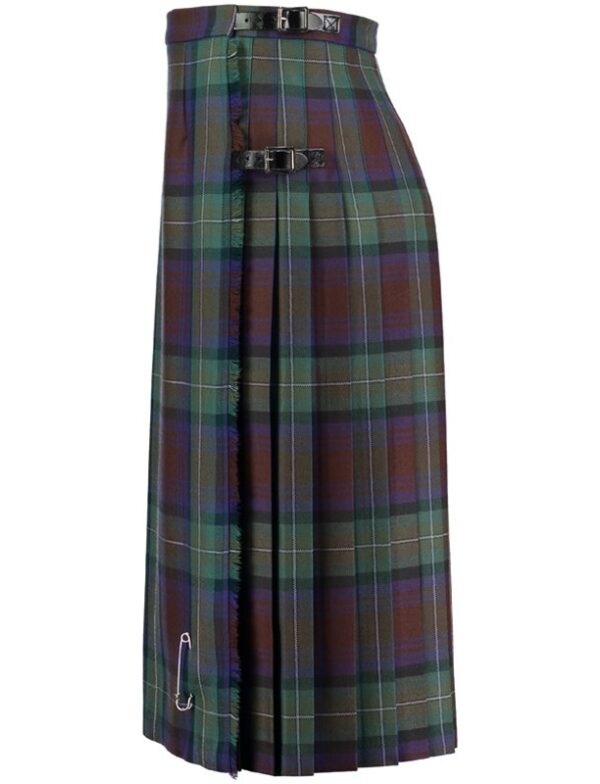
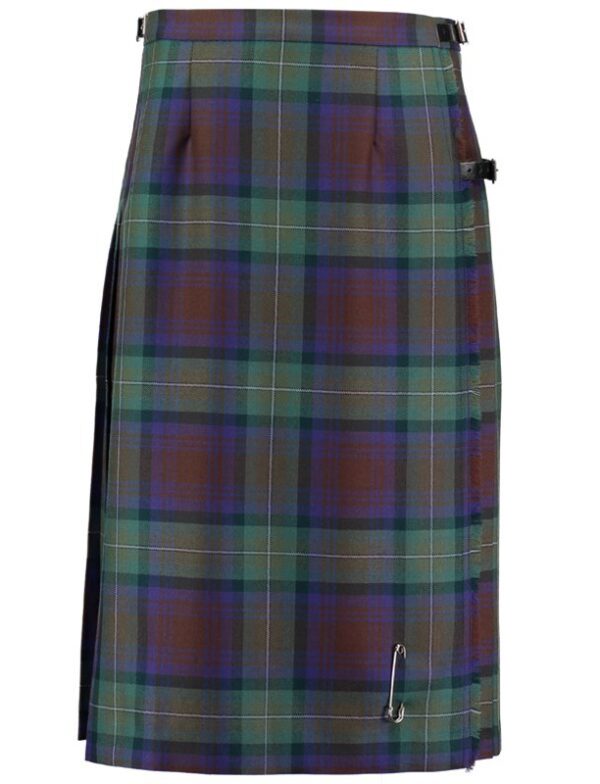
About our women's knee-length kilts
Traditional Scottish women's kilts for weddings, Burns Night, and Highland ceremony, since 2017
Kilt and Jacks has been making women's knee-length kilts by hand since 2017. Every knee-length kilt we ship — whether for a Scottish wedding guest, a bride's mother or bridesmaid, a Burns Night dinner attendee, a Highland games competitor, or a buyer building a proper Scottish tradition wardrobe — is drafted from six measurements you send us: waist, hips, kilt length (traditionally 26-30 inches for knee-length kilts), hip drop, thigh, and any specific fit notes. Cut and stitched by hand at our workshop under Master Kilt Maker Rachel Bell, using proper Scottish kilt construction: eight yards of traditional tartan wool where the specification calls for it, hand-pleating at the back, leather straps and buckles at the waist, and lining where the formal register requires it.
What defines the knee-length women's kilt
The knee-length kilt is the traditional formal register of Scottish women's kilts — the length and construction that reads as proper Scottish Highland dress for formal occasions where the shorter billie kilt or mini kilt would be inappropriate. The tradition of women's Highland dress dates to the codification of Scottish formal wear in the 18th and 19th centuries, when Scottish tailors began cutting women's kilts in the traditional knee-length register for formal court occasions, Scottish weddings, ceremonial events, and formal Highland gatherings. Today, the knee-length women's kilt is what you order when you want to attend a Scottish wedding or Burns Night in genuine Scottish tradition, when you're standing as part of a wedding party in Highland Dress, or when the event dress code specifies Scottish or Highland formal.
The construction distinguishes it from the shorter kilts in our range. Knee-length kilts sit at 26 to 30 inches in length, measured from waistband to hem at the front — long enough to read as proper formal Scottish tradition, cut to fall just at or below the knee depending on your specific measurements and preference. The pleating is traditional Scottish hand-pleating at the back with proper pleat depth and count, the waistband is wide with traditional leather straps and buckles, and the tartan wool weight is appropriate for the formal register (medium to heavy weight rather than lighter fashion-register weights). Every knee-length kilt is cut to be worn as the base garment of Full Highland Dress — the complete Scottish formal outfit — even when purchased individually.
Scottish weddings and Highland Dress specifically
Scottish weddings involve women's Highland dress as much as men's, and the knee-length kilt is the correct base garment for female wedding participants and guests in traditional Scottish and Highland-formal weddings. For brides at Highland-tradition weddings, the knee-length kilt combined with a fitted white bodice, tartan sash, and traditional accessories creates a specifically Scottish bridal register that respects the tradition. For bridesmaids and mothers of the bride, coordinated knee-length kilts in the wedding party's chosen tartan create the traditional Scottish wedding party look. For female wedding guests, knee-length kilts in universal tartans or personal clan tartans read as appropriately formal for the Scottish register without competing with the wedding party's specific tartan.
The register varies by wedding formality. For formal evening Scottish weddings (where men wear Prince Charlie outfits and the equivalent black-tie Highland register applies), knee-length kilts in the appropriate tartan combined with formal bodices and traditional accessories read correctly. For daytime and country Scottish weddings (where men wear Argyll or Tweed outfits and the register is semi-formal), knee-length kilts with more relaxed bodices and accessories read appropriately. For ceilidh-focused and informal Scottish weddings, knee-length kilts work but shorter billie kilts also become appropriate for younger guests and dance-focused contexts.
If you're building a complete Highland Dress outfit for a wedding — bridal, bridal party, or guest — knee-length kilts pair naturally with our Highland wear accessories and with our future Women's Kilt Outfits — Full Highland Dress range (coming soon), which will supply complete coordinated outfits including bodice, sash, sporran where appropriate, and accessories as a matched set. Message us with your wedding context — bridal party role, wedding formality register, party size for coordinated bridesmaid orders — and we'll route you correctly.
Burns Night, Highland occasions, and ceremonial Scottish contexts
Beyond weddings, knee-length kilts are the correct Scottish women's register for a range of formal Highland contexts. Burns Night (25 January annually, celebrating the Scottish poet Robert Burns) is one of the most important Scottish cultural occasions globally, celebrated at formal Burns Suppers in Scotland and internationally — the register calls for proper Highland dress, and knee-length kilts are the appropriate Scottish women's garment. St Andrew's Night dinners (30 November, Scotland's national day) similarly call for Highland dress at the formal versions of the celebration. Highland games and gatherings — from the small local Highland games in Scotland to the major international events in Canada, the US, Australia, and New Zealand — often include formal evening components (award ceremonies, chieftain's dinners, formal dances) where knee-length kilts are the appropriate women's register.
Ceremonial and heritage events — clan gatherings, formal Scottish heritage society events, Scottish country dance formal evenings, court and civic events with Scottish tradition components — all fit the knee-length kilt register. If you're building a Scottish tradition wardrobe that will serve you across multiple formal occasions over years, a knee-length kilt in a personal clan tartan or in Black Watch (the most versatile universal tartan for formal contexts) is the honest first purchase.
Choosing your tartan for a knee-length kilt
Tartan choice for a formal knee-length kilt matters more than for shorter fashion or dance kilts, because you're likely to wear this kilt across multiple important occasions over years. Three routes apply.
Clan or family tartan. If you have Scottish family heritage, wearing your clan or family tartan in your formal knee-length kilt is meaningful and reads correctly at every Scottish tradition context. The Scottish Register of Tartans lists registered tartans by surname and clan. For wedding contexts specifically, wearing your own family tartan (rather than the wedding party's chosen tartan) is entirely appropriate as a guest — it honours your own heritage while respecting the wedding party's choice.
Universal tartan. If you don't have a specific Scottish family connection, universal tartans are open to anyone and appropriate for formal contexts. Black Watch is the most versatile universal tartan for formal wear — dignified dark blue, green, and black that reads correctly across every Scottish formal context, and the tartan most commonly worn by female Scottish tradition buyers without specific family heritage. Royal Stewart (bright red — the most recognised tartan globally) reads strongly at formal contexts, particularly for buyers who want visible tartan presence. Isle of Skye (blues and greens) is contemporary and universal. Flower of Scotland (modern national tartan) is inclusive Scottish for anyone. Caledonia is the universal Scottish tartan open to all.
Wedding-matched tartan. For bridal parties, coordinating with the wedding party's chosen tartan is the tradition — brides typically select the tartan for their bridesmaids and immediate family based on the groom's clan tartan, the bride's clan tartan, or a shared tartan choice that suits the wedding aesthetic. If you're a bridesmaid or mother of the bride, coordinate with the bride's chosen tartan for your knee-length kilt.
Not sure which tartan is right for your context? Message us with your Scottish family surname if you have one, your event context, and any tartans you've been considering, and we'll advise.
How the knee-length kilt differs from other women's kilts we make
Compared to billie kilts (22-24 inches) — the knee-length kilt is longer and reads as more formal. Billie kilts are the Highland dance and Scottish tradition register for younger and dance-focused contexts. If your primary use is Highland dance rather than formal wear, see our billie kilts range instead.
Compared to mini kilts (16-20 inches) — the knee-length kilt is significantly longer and reads as formal Scottish tradition rather than fashion or alternative register. Mini kilts are contemporary and casual; knee-length kilts are formal and traditional. Different registers entirely. If you want a shorter kilt in fashion or alternative register, see our mini kilts range.
Compared to utility kilts — the knee-length kilt is proper Scottish tradition construction; utility kilts are contemporary streetwear and alternative fashion with utility hardware. Fundamentally different registers. Utility kilts have no place at a formal Scottish wedding or Burns Night; knee-length kilts are the correct register for those contexts.
Knee-length kilts pair naturally with our Highland wear accessories for complete Scottish outfits — kilt hose, flashes, tartan sashes, hair accessories, and other traditional Scottish accessories. Coming soon: our Women's Kilt Outfits — Full Highland Dress range, which will supply complete coordinated outfits (kilt, bodice, sash, sporran where appropriate, and accessories) as matched sets for wedding parties and formal Highland occasions.
Every knee-length kilt ships in ten working days, is hand-tailored at our workshop, and is guaranteed to fit the measurements you sent us. If it doesn't, we remake it at no cost. See our returns policy for full terms.
26-30 inchesTraditional knee-length
Scottish register
Scottish register
10 daysCut, tailored,
shipped
shipped
Eight yardsTraditional Scottish
tartan wool
tartan wool
Wedding coordinationFor bridal parties
and groomswomen
and groomswomen
Frequently asked
Questions before ordering
What length is a traditional women's knee-length kilt?
Traditional women's knee-length kilts sit at 26 to 30 inches in length, measured from the waistband to the hem at the front. The name is literal — the kilt should fall at or just below the knee depending on the wearer's height and preference. Within the 26-30 inch range, the specific length that suits you depends on your height and where you want the kilt to sit relative to your knee. Shorter buyers (under 5'5") often prefer 26-27 inches to avoid the kilt appearing overly long; taller buyers (5'8"+) often prefer 28-30 inches for proportional balance. All our knee-length kilts are made-to-measure — you specify the exact length in your measurements, and we cut to it. If you're unsure, message us with your height and we'll recommend.
What do you wear with a women's knee-length kilt for a Scottish wedding?
The complete outfit depends on the wedding formality and your role. For formal evening Scottish weddings: knee-length kilt in the appropriate tartan, fitted white bodice or blouse, tartan sash pinned at the shoulder in the traditional style, kilt hose or knee-high socks with flashes, ghillie brogues or elegant closed-toe shoes, and traditional accessories (small sporran optional, hair accessories, kilt pin). For daytime and country Scottish weddings: same base outfit with slightly less formal bodice options (jumper, twinset, less structured tops), similar accessories. For bridal party members specifically: coordination with the bride's chosen tartan and accessory selections, often with a matching plaid or sash across all bridesmaids. Coming soon: our Women's Kilt Outfits — Full Highland Dress range will supply complete matched outfits. For now, shop our Highland wear accessories to build the complete outfit, or message us with your wedding context for coordination.
Can I wear a knee-length kilt if I'm not Scottish?
Yes. Highland dress is worn today by anyone attending a Scottish or Scottish-adjacent formal occasion, regardless of family heritage. If you're a female guest at a Scottish wedding, a Burns Night dinner attendee, or building Scottish tradition wardrobe without specific family heritage, universal tartans (Black Watch, Royal Stewart, Isle of Skye, Flower of Scotland, Caledonia) are entirely open to anyone. The tradition welcomes serious participation regardless of family background — what matters is respecting the tradition properly and wearing the outfit appropriately for the event. Highland dress is worn at Scottish weddings globally (Scottish-heritage weddings in the US, Canada, Australia, and beyond), at Burns Night dinners hosted by Scottish societies worldwide, at Highland games in dozens of countries, and by anyone who appreciates the tradition regardless of heritage background.
Do you offer bridesmaid and bridal party coordination for knee-length kilts?
Yes. For bridal parties ordering multiple coordinated knee-length kilts — bridesmaids, mother of the bride, mother of the groom, and immediate family in the same tartan and cut — we offer party coordination and group pricing. Contact us with the wedding date, party size, chosen tartan, and each party member's measurements, and we'll coordinate the order to ship together, cut to the same tartan specification with any variations needed per party member's fit and role. For weddings where the bride wants her Highland dress specifically distinguished from bridesmaids (different tartan, additional formal elements), we can coordinate that too. Message us with your wedding date and party details for a coordinated quote.
How do I choose my tartan for a knee-length kilt?
Three routes. Clan or family tartan — if you have Scottish family heritage, your clan or family tartan is the meaningful choice and reads correctly at every Scottish tradition context. The Scottish Register of Tartans lists registered tartans by surname and clan. Universal tartan — if you don't have a specific family connection, Black Watch (dark, dignified, most versatile for formal wear), Royal Stewart (bright red, most recognised globally), Isle of Skye (blues and greens, contemporary), Flower of Scotland (modern national tartan), and Caledonia (universal Scottish) are all appropriate for anyone. For formal contexts specifically, Black Watch is the most versatile choice. Wedding-matched tartan — for bridal parties, coordinate with the bride's chosen tartan for your knee-length kilt. As a guest at a wedding, you can wear your own family tartan or a universal tartan without competing with the wedding party's choice. Message us with your context if unsure.
How is a women's knee-length kilt different from a men's kilt?
The construction and cut are genuinely different, though both use traditional Scottish tartan wool and hand-pleating. Women's knee-length kilts are cut to women's proportions with a wider hip drop, a fitted waistband that sits at the natural waist, pleat placement adjusted for the female silhouette, and a length range (26-30 inches) that falls at or below the knee based on women's typical proportions. Men's kilts are cut to men's proportions with different waist-to-hip ratios, waistbands that sit at the true waist above the hip (higher than most modern trousers), and a length that sits at the top of the kneecap. Beyond the cut, women's Highland dress and men's Highland dress differ in the accessories worn with the kilt (women wear tartan sashes and bodices; men wear jackets, waistcoats, and full-dress sporrans), the specific hose and footwear conventions, and the overall outfit register. Our knee-length kilts are cut specifically for women's proportions — not scaled-down men's kilts.
How do I care for a knee-length kilt?
Traditional Scottish tartan wool kilts require specific care to preserve the pleating, tartan, and construction over years of use. Dry clean only for the tartan wool (do not machine wash or hand wash — the pleating and lining will not survive water washing). Hang on a proper kilt hanger when not in use to preserve the pleats (do not fold long-term — permanent creases develop in the wrong places). Store in a breathable garment bag away from direct sunlight to prevent tartan fade over time. Address stains promptly with professional dry cleaning; do not spot-clean at home with water or general household stain removers, which can damage the wool. Air the kilt after wearing rather than folding or bagging immediately. With proper care, a hand-tailored knee-length kilt lasts decades and can be worn across multiple important Scottish occasions over a lifetime — many of our customers wear the same knee-length kilt at their wedding, at subsequent family Scottish events, and eventually pass it down.
What if I need my knee-length kilt for a specific date?
Every knee-length kilt ships in ten working days from order confirmation, plus international transit time depending on destination. For a wedding, Burns Night, or other specific-date occasion, order at least 6-8 weeks before the event to allow for our workshop time (10 working days), international shipping (typically 3-10 additional days depending on destination), any potential fitting concerns, and a safety margin. For Scottish weddings from mid-March to May, order by the end of January. For Burns Night (25 January), order by mid-November of the previous year. For US, Canada, Australia, and other international destinations, add an extra week to your planning timeline. If you have a tight timeline, message us before ordering — we can occasionally accommodate rush orders with a small rush fee, though we'll be honest with you about whether we can meet your specific date before you commit.