BLACK FRIDAY IS HERE! ✦ 20% OFF EVERYTHING · Shop the Sale →
About our folk and Celtic music instruments
Folk and Celtic instruments in the living tradition, supplied since 2017
Kilt and Jacks has been supplying folk and Celtic music instruments — harps, Celtic flutes, and tin whistles — to musicians and buyers of the tradition since 2017. Every instrument we ship is sourced from established Celtic instrument makers, quality-checked at our workshop before dispatch, and backed by our replacement guarantee. We supply Celtic session players, folk revivalists, harpists at every level from beginner through professional, and increasingly the growing global community of lyre harp players drawn to the instrument through Celtic revival, folk music, mythology, and meditative playing traditions.
The range divides into two coherent instrument families that together represent the melodic voice of Celtic and folk music: harps — lyre harps drawing on the ancient Greek and modern revival tradition, Celtic harps (clàrsach) drawing on native Gaelic and Scottish harp tradition, and the strings and accessories every harpist needs across their playing life; and Celtic flutes and tin whistles — the wooden Irish flutes and metal tin whistles that carry the melody in Irish and Scottish session music, folk performance, and the traditional Celtic ensemble.
What defines a folk and Celtic instrument
Folk and Celtic music instruments sit within a genuinely living tradition — not a museum tradition preserved for historical accuracy, but a working musical culture that continues to evolve through session players in Irish and Scottish pubs, folk festivals across Europe and North America, Celtic revival ensembles, and increasingly through global online communities where players share tunes, techniques, and cultural context across borders. What holds the category together is the tradition itself: the melodic modes, the ornamentation, the tune repertoires (jigs, reels, hornpipes, slow airs, sean-nós), and the shared cultural register that Celtic instruments carry regardless of where the player lives or how they came to the music.
What this means for the buyer: purchasing a folk or Celtic instrument is different from purchasing a general music instrument. The tradition matters. A tin whistle is not just a small metal flute — it's the specific instrument of Irish and Scottish traditional music with a specific tone, tuning convention, and repertoire. A Celtic harp is not just a small harp — it's the instrument of Gaelic tradition with a specific string arrangement, tuning, and playing style. We supply instruments that meet the traditional expectations of the Celtic music community rather than generic music-retail approximations, and we support the buyer with content that respects the tradition they're joining.
The instrument families we supply
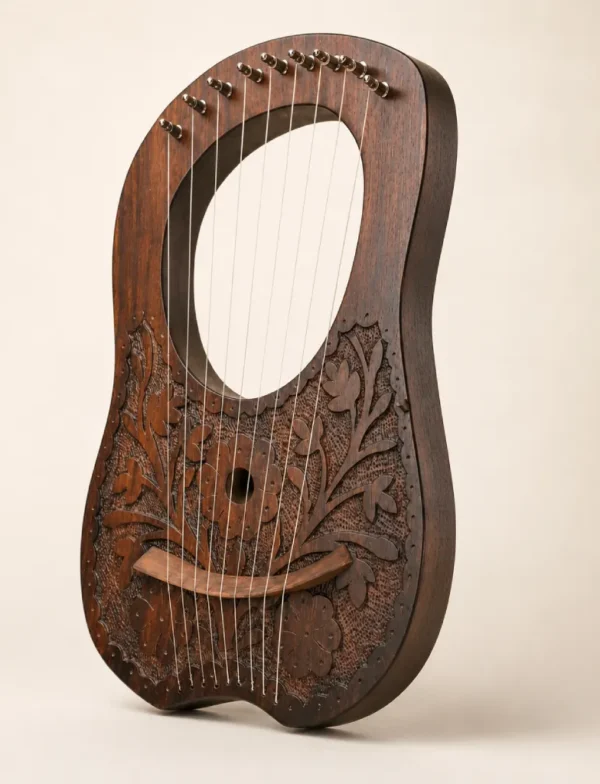
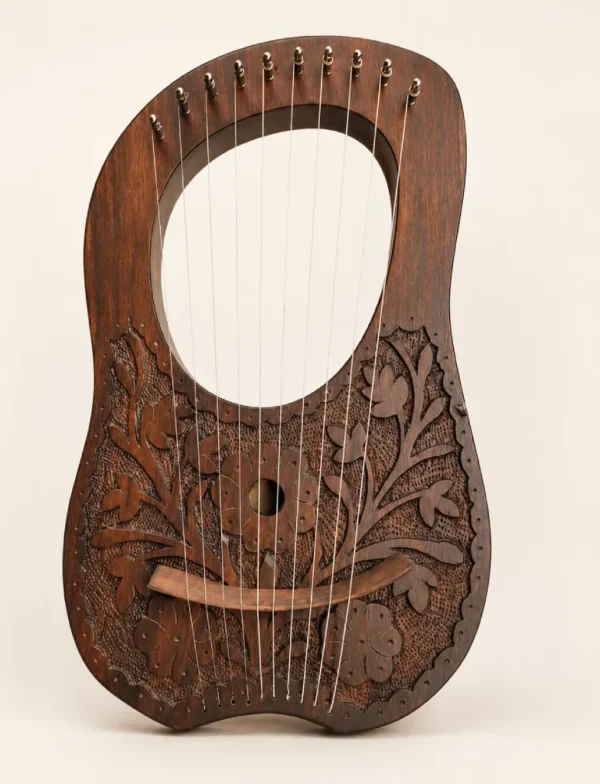
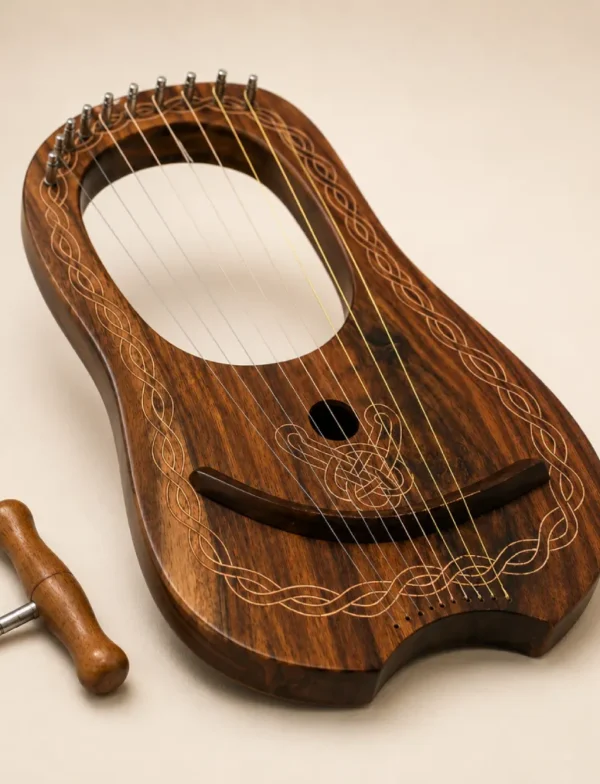
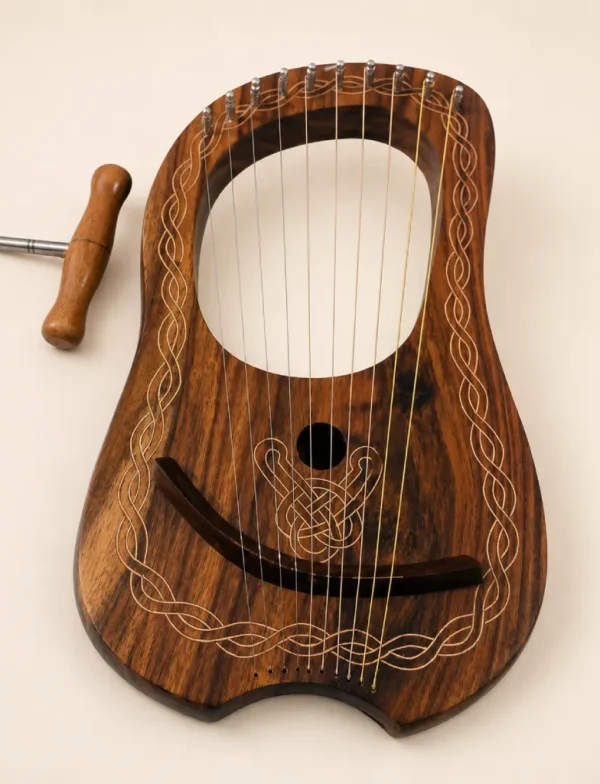
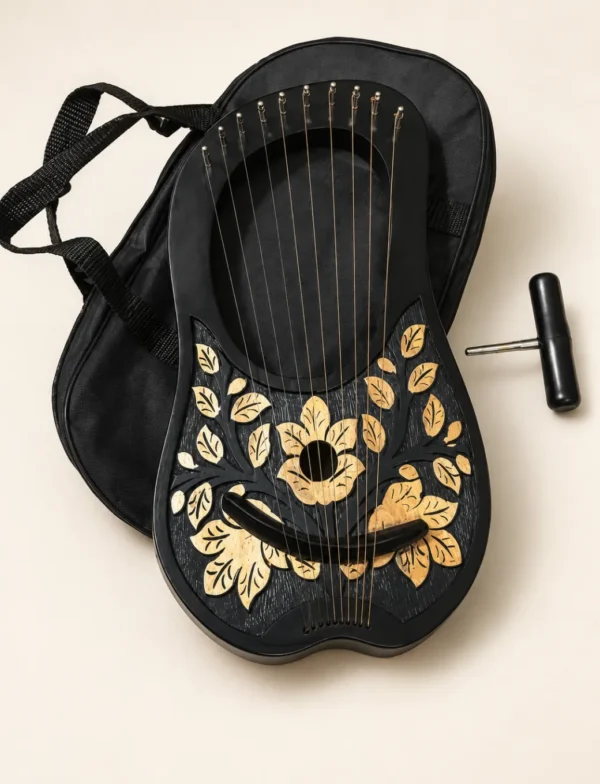
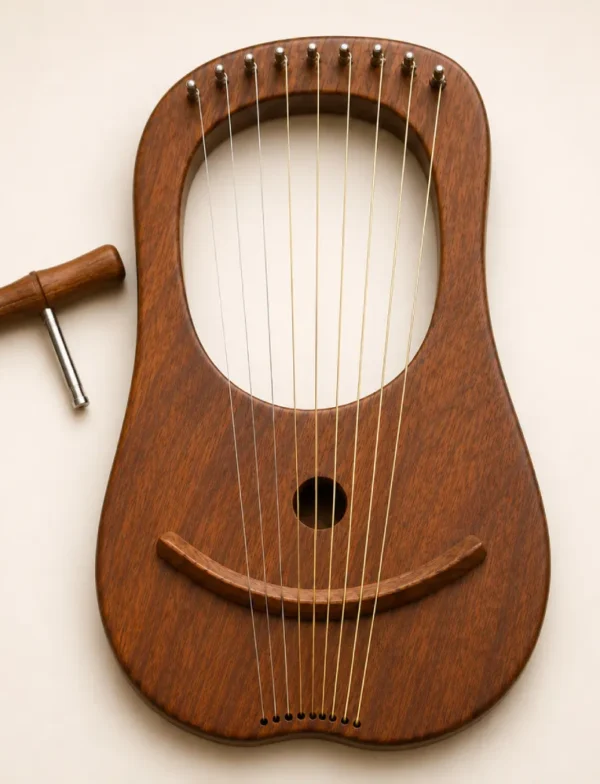
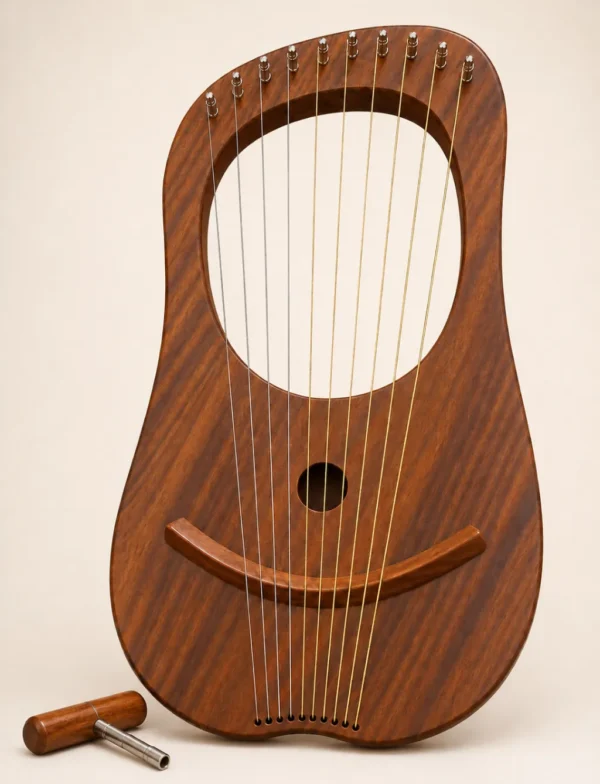
Harps. The range spans two harp traditions that share the instrument name but come from genuinely different cultural sources. Lyre harps — the small, portable stringed instrument with origins in Ancient Greek and Middle Eastern tradition, revived in the modern era through folk music, Celtic revival, meditation and therapeutic music, and increasingly through global online communities. Celtic harps (clàrsach in Scottish Gaelic, cláirseach in Irish) — the traditional Gaelic harp with wire or gut strings, a defined seat in Scottish and Irish tradition dating back over a thousand years, and a modern revival that has produced serious professional players and educational infrastructure. Both traditions are legitimate paths into harp playing, and both are supported in the range. See the harps range.
Celtic Flutes and Tin Whistles. The melodic voice of Irish and Scottish traditional session music. Tin whistles — the small metal fipple flute with six finger holes, the universal beginner instrument of Irish traditional music (nearly every Irish traditional musician starts on tin whistle), the session instrument played across Ireland and worldwide, and the entry point for anyone learning Celtic melodic tradition. Celtic flutes — the wooden keyless or keyed flute in the Irish traditional style, closer to the eighteenth-century wooden flute than to the modern silver concert flute, with the specific tone and tuning that Celtic tradition expects. Both are supplied with tuning options that match Irish traditional keys and playing conventions. See the Celtic flutes and tin whistles range.
Not sure which instrument suits your starting point? Message us with your context — musical experience, interest area (Irish session, Scottish tradition, harp meditation, lyre revival), and any specific instrument you've been considering — and we'll route you to the right range before you commit.
Choosing your first Celtic instrument
Different starting points call for different first instruments, and the honest answer varies by what you actually want to play and how you want to play it. Here are the four most common paths.
If you want to play Irish traditional session music — jigs, reels, hornpipes, slow airs in a pub session or with folk musicians — the tin whistle is the correct first instrument. Nearly every Irish traditional musician starts on tin whistle, the instrument is inexpensive, the learning curve is honest (you can play recognisable Irish tunes within weeks), and it teaches the ornamentation and phrasing that carries into every other Celtic instrument you might learn later. A tin whistle in the key of D is the universal Irish traditional starting instrument.
If you want to play the harp for meditation, therapeutic music, or the lyre harp revival aesthetic — meditation music, Greek mythology-influenced folk, TikTok lyre communities, or general folk exploration — a lyre harp is the right first instrument. Lyre harps range from small 7-string starter instruments through to 16-string and 22-string models, and the entry level is genuinely accessible for buyers with no prior musical background.
If you want to play in the Celtic harp tradition specifically — Gaelic tradition, Scottish and Irish traditional harp music, competitive Celtic harp — a lap harp or floor Celtic harp (clàrsach) is the right instrument. This is a more serious commitment than lyre harp — Celtic harps are larger, more expensive, and require proper instruction to play well — but the tradition is genuinely rich and the community welcomes serious learners.
If you want to play Celtic flute in the Irish or Scottish traditional style — sessions, folk ensemble, or serious traditional performance — a wooden Celtic flute is the instrument. Many players come to the Celtic flute after starting on tin whistle; the transition is natural, and starting on tin whistle first is often the honest path even if the Celtic flute is your eventual goal.
If none of these paths fits your context exactly, or you're buying for someone else and unsure which instrument to choose, message us with the context and we'll help match the right first instrument to the buyer.
The Celtic and folk tradition context
Every instrument in this range carries cultural context that matters. Irish tin whistles and Celtic flutes belong to Irish traditional music, a living tradition with roots reaching back centuries, currently sustained by session players in pubs across Ireland and worldwide, festival communities, and academic institutions preserving and teaching the tradition. Celtic harps sit in Gaelic tradition specifically — Scottish and Irish harp playing predates modern pipe band tradition by hundreds of years and remains a distinct musical culture with its own repertoire, ornamentation, and cultural context. Lyre harps have a genuinely broader origin — Ancient Greek and Middle Eastern traditions, but with a modern global revival that has genuinely embraced the instrument across folk, meditation, and Celtic-revival contexts.
Playing these instruments respectfully means learning something about the tradition they come from. We support that with educational content on each sub-category page — repertoire recommendations, learning resources, cultural context, and links to session communities and teachers where appropriate. If you're new to the Celtic music tradition and want to learn properly rather than just buy an instrument, contact us and we'll point you toward the resources and teachers that fit your starting point.
Every folk and Celtic music instrument ships in ten working days, is quality-checked before dispatch, and comes with our replacement guarantee for manufacturing defects. See our returns policy for full terms. Folk and Celtic instruments pair naturally with our tartan kilts and Highland dress for musicians performing in traditional Scottish context, and with our pipe band instruments range for musicians moving between Celtic session traditions and pipe band performance.
2 familiesHarps, Celtic flutes
and tin whistles
and tin whistles
10 daysQuality-checked,
shipped
shipped
Traditional makersCeltic tradition
and living practice
and living practice
Replacement guaranteeOn manufacturing
defects
defects
Frequently asked
Questions before ordering
What's the difference between a lyre harp and a Celtic harp?
Cultural origin and playing tradition. Lyre harps originate in Ancient Greek and Middle Eastern tradition — the instrument played by figures in Greek mythology and depicted throughout classical antiquity — and have been revived in the modern era through folk music, meditation and therapeutic playing, Celtic revival aesthetics, and increasingly through global online communities. Lyre harps are typically small (7 to 22 strings), portable, and accessible to complete beginners with no prior musical background. Celtic harps — called clàrsach in Scottish Gaelic and cláirseach in Irish — are the traditional Gaelic harp of Scotland and Ireland, with roots reaching back over a thousand years. Celtic harps are larger (typically 22 to 38 strings), more expensive, and require proper instruction to play in the tradition. Both are legitimate instruments — the choice depends on which tradition and playing style you want to pursue. If you want portable, accessible, meditative playing with folk-revival aesthetic, lyre harp. If you want to play in the Scottish or Irish Celtic tradition specifically, Celtic harp.
What instrument should I start with in Celtic music?
The tin whistle. Almost every Irish traditional musician starts on tin whistle, and it remains the honest first instrument for anyone entering Celtic music tradition regardless of what other instruments they plan to play later. The tin whistle is inexpensive, portable, has a genuinely accessible learning curve (you can play recognisable Irish tunes within weeks), and teaches the ornamentation, phrasing, and melodic structure that carries into every other Celtic instrument. A tin whistle in the key of D is the universal Irish traditional starting instrument. Even players whose eventual goal is Celtic flute, uilleann pipes, fiddle, or Celtic harp typically benefit from spending 6 to 12 months on tin whistle first — the technique and tradition-sense you build transfers directly. If your eventual goal is harp specifically (lyre or Celtic), you don't need to start with whistle — harp is a valid direct starting point — but for melodic tradition instruments (flute, pipes, fiddle), start on tin whistle.
Are lyre harps really from Greek mythology, or is that just an aesthetic?
Both — and the distinction matters. Lyre harps genuinely originate in Ancient Greek and Middle Eastern tradition, and the instrument is authentically part of the classical civilisations that gave us the myths (Apollo, Orpheus, and countless other figures are depicted with lyres). But the modern lyre harp revival — the wave of interest driven by TikTok, mythology-adjacent literature (Percy Jackson series, Madeline Miller's Song of Achilles, general classical mythology aesthetic), and folk-revival meditation communities — is a genuine contemporary movement that has embraced the historical instrument as a living modern practice. Modern lyre harps aren't historical reproductions; they're new instruments in the lyre tradition, built for contemporary players who care about both the aesthetic and the accessible playing. So the aesthetic is real, and the tradition is real, and both are legitimate reasons to play the instrument. Modern lyre harp players play everything from ancient Greek modes to Celtic tunes to pop songs to meditative improvisation.
Do I need to be Irish or Scottish to play Celtic music instruments?
No. Celtic music has been a global tradition for over a hundred years, and today the community includes serious players from every continent — American session musicians in Boston and Milwaukee, Japanese Irish traditional players in Tokyo, German and French folk musicians who have shaped continental Celtic revival, Australian and New Zealand Celtic ensembles, and increasingly Chinese and South Asian musicians engaging with the tradition. Playing Celtic music respectfully means learning the tradition properly — the tunes, the ornamentation, the cultural context, the etiquette of sessions — rather than approaching the music as a costume. If you're new to Celtic music and want to learn properly, seek out session communities in your area (they exist in most cities globally), find teachers who can introduce you to the tradition, and treat the music as the living cultural practice it is rather than as generic folk music.
What are Irish sessions and can I join one?
Irish sessions (seisiúin) are informal gatherings of traditional musicians who play tunes together, typically in pubs or community spaces, usually without amplification or performance staging. Sessions are the living heart of Irish traditional music — the place where tunes are shared, players develop, and the tradition continues. Session etiquette matters: you don't just show up and start playing. New players typically listen first for weeks or months, learn tunes from the local session repertoire, and gradually join in when they can play tunes cleanly at session tempo. If you're a beginner, focus on learning to play a small number of common session tunes well rather than trying to jump in with limited repertoire. Sessions exist in most cities globally — search "Irish session" plus your city, or ask at Irish pubs and cultural centres. If you're serious about entering the tradition, finding a local session and a local teacher is the correct path, and the instruments in this range will serve you well as you develop.
How long does it take to learn tin whistle or lyre harp?
Both instruments have genuinely accessible learning curves compared to most instruments. Tin whistle — most beginners can play recognisable Irish tunes within 4 to 8 weeks of consistent practice (30 minutes a day). Session-ready playing takes 6 to 12 months. Serious tradition-level playing takes years, but the accessible starting point is real. Lyre harp — most beginners can play simple melodies within a few weeks of picking up the instrument, and comfortable multi-string playing develops over 3 to 6 months. More complex accompaniment and improvisation develops with continued practice. Neither instrument requires prior musical background, but both benefit significantly from proper instruction — YouTube tutorials get you started, but a qualified teacher (in-person or online) accelerates learning meaningfully. For tin whistle, look for Irish traditional music teachers in your area. For lyre harp, the global online community includes many active teachers offering online lessons.
Do you ship folk and Celtic instruments internationally?
Yes. We ship folk and Celtic music instruments to the United States, Canada, Australia, New Zealand, the United Kingdom, Ireland, continental Europe, and increasingly across Asia. Tin whistles and lyre harps travel especially well — both are compact instruments that ship safely in our standard packaging. Celtic flutes and Celtic harps require larger packaging and more careful handling in transit, but we ship them internationally with full insurance and tracking. All international orders arrive with our replacement guarantee intact — if the instrument arrives damaged or defective, we replace it at no cost. Customs and import duties are the buyer's responsibility outside the shipping origin, and duty rates for musical instruments vary by country. If you're unsure how customs will treat a specific order in your country, contact us before ordering.
What accessories do folk and Celtic instruments need?
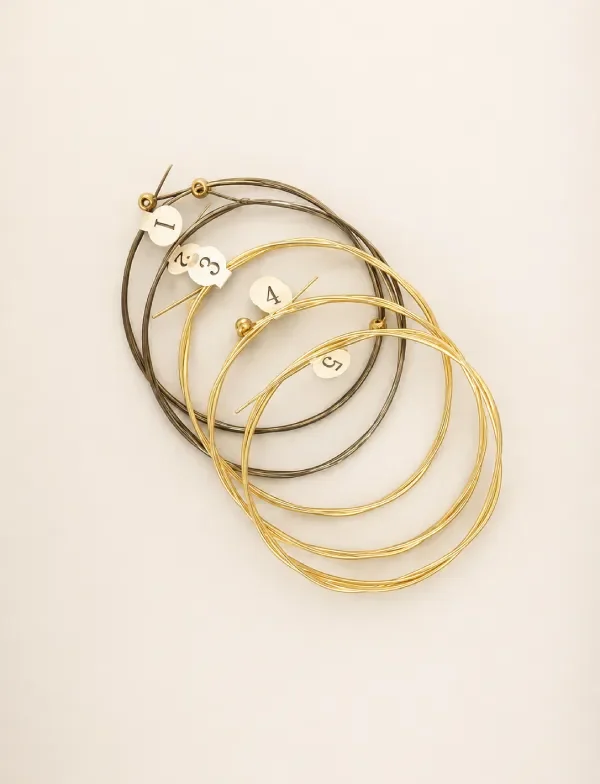
Different instruments have different maintenance needs. Tin whistles are essentially maintenance-free — occasional cleaning with a soft cloth, and replacement when the fipple wears (typically after years of playing). No consumable parts. Celtic flutes require occasional oiling of the wood (about twice a year for wooden flutes), swabbing after playing to prevent moisture buildup, and periodic checking of pads and keys on keyed models. Lyre harps require string replacement as strings age or break (typically a full re-stringing every 1-3 years depending on playing frequency), tuning keys, and occasional wood conditioning if the harp body is wooden. Celtic harps require the same string care plus more complex tuning setup and periodic professional maintenance for serious playing. Our accessories range covers strings, tuning keys, cases, cleaning supplies, and everything else players need across the range.