BLACK FRIDAY IS HERE! ✦ 20% OFF EVERYTHING · Shop the Sale →
About our denim kilts
Denim kilts, hand-cut to your measurements since 2017
Kilt & Jacks has been making denim kilts by hand since 2017. Every denim kilt we ship — whether classic blue, black, raw indigo, or distressed — is drafted from three measurements you send us: waist at the natural waistline (not the trouser waist, which is the single most common measurement mistake), hip at the widest point, and length from waist to the middle of the kneecap. There is no factory sizing. There is no closest fit. Prices from $99, in 10oz to 14oz denim with reinforced construction throughout.
What makes a denim kilt different
A denim kilt takes the wraparound silhouette of the traditional Scottish kilt and cuts it from the fabric most men already trust — the same denim used in workwear jeans and jackets. What sets it apart from other kilt styles is familiarity. Denim is the fabric men understand: it wears in, it fades where you fold it, it earns character through use, and it holds up to daily rotation without ceremony. A denim kilt reads casual and modern in a way tartan can't and reads familiar in a way leather or camo don't.
Denim kilts have no historical basis in Scottish dress. They emerged through the American utility kilt movement in the early 2000s alongside cargo and canvas styles, and became a category of their own as men who wanted the kilt silhouette for daily wear — but didn't want tactical hardware or subcultural signalling — found denim as the middle ground. Today they're worn to festivals, gigs, streetwear contexts, weekends, and daily rotation. If you're being fitted for a Highland wedding or Burns Night, the correct choice is a Scottish tartan kilt, not a denim one.
Materials and construction
We work in 100% cotton denim across three weights. 10oz denim is our lightest — softer to the hand, comfortable in warm weather, right for daily wear and streetwear contexts. 12oz denim is our standard — the workhorse weight, structured enough to hold pleat shape, soft enough to wear in over a few weeks. 14oz raw denim is our heaviest — unwashed and unsanforized, sold stiff and dark, meant to fade and soften to your body over months of wear. Raw is for men who want the kilt to become theirs in the way a good pair of raw jeans does.
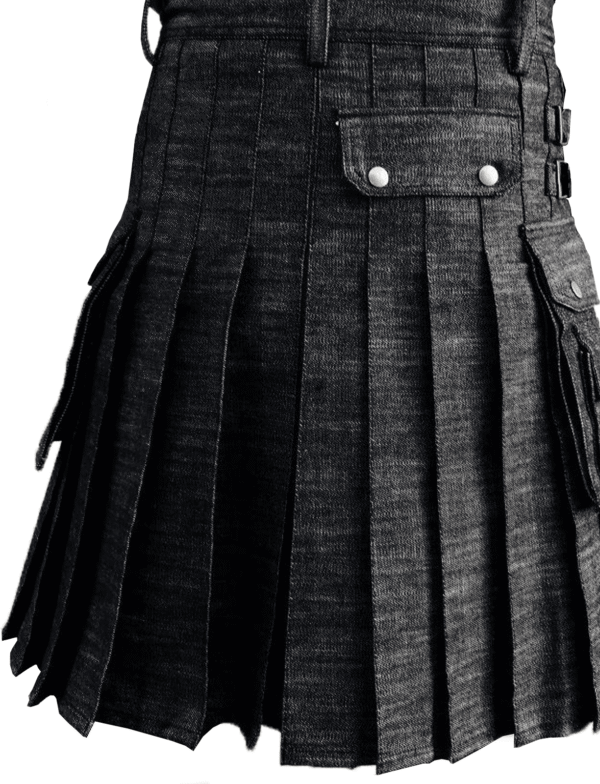
Pleats are stitched permanently — the same construction as our utility and camouflage kilts — which gives the garment a structured silhouette that holds shape in movement. Belt loops are reinforced with double-stitched bar tacks. Hardware is solid brass or matte black — buckles, rivets at stress points, and heavy-duty snap closures where used. Stitching is contrast (gold or tan on blue, tonal on black) in the workwear tradition, with double needle work at every load-bearing seam. Every denim kilt is inspected against the measurements you sent us before it ships.
The styles of denim kilt we make
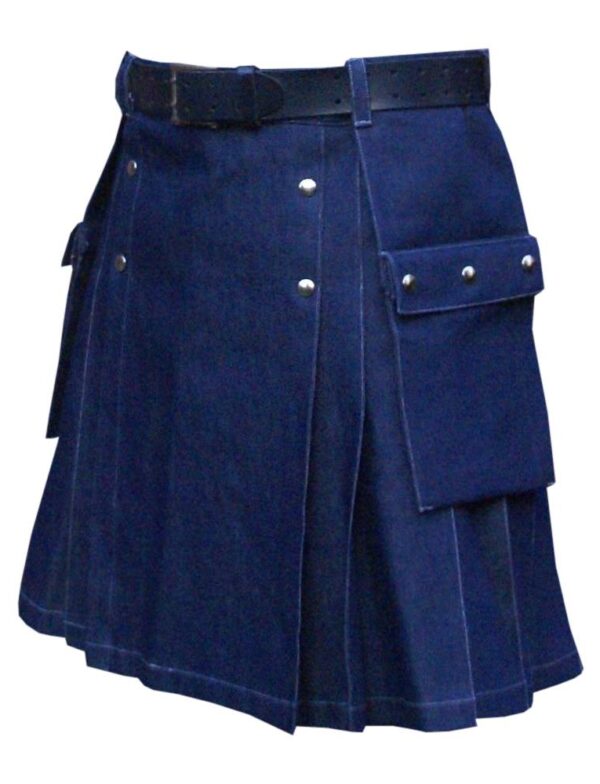
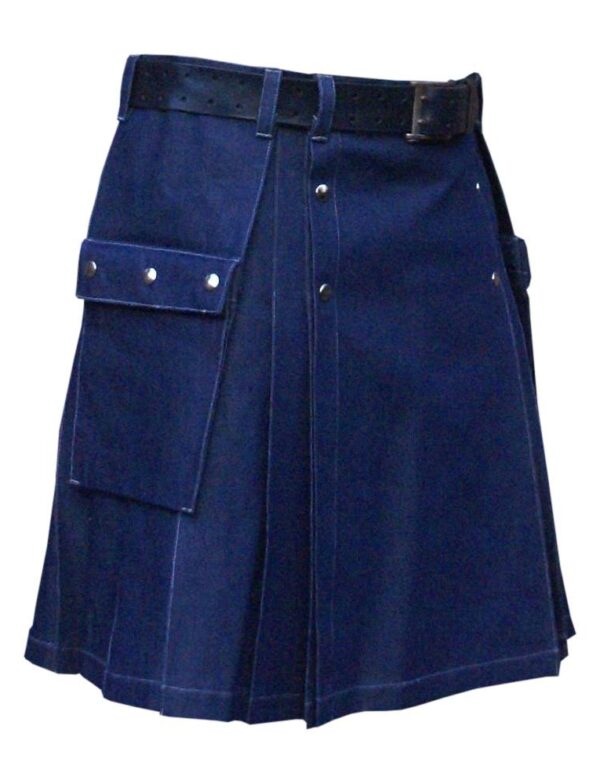
Classic blue denim kilt. Mid-wash indigo, minimal hardware, structured pleats, contrast stitching. Reads workwear-casual. Right for daily wear, festivals, weekends, and men who want the kilt silhouette without any tactical or subcultural framing.
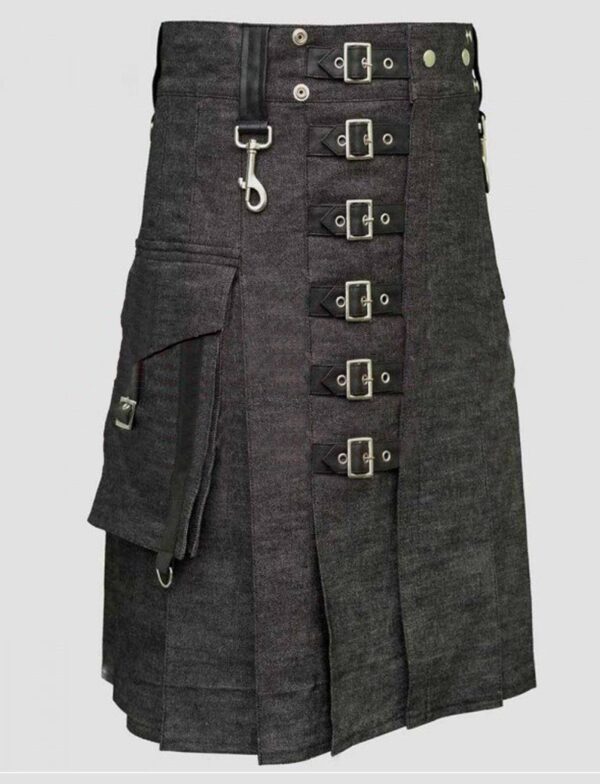
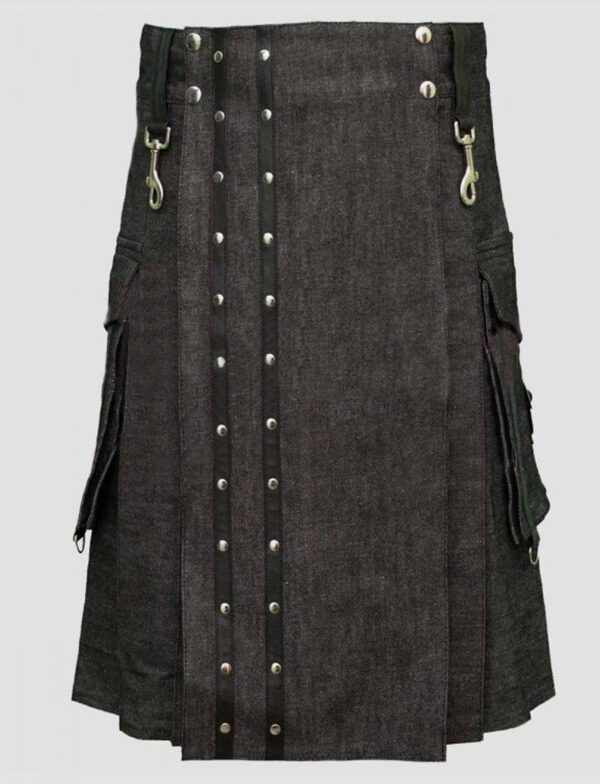
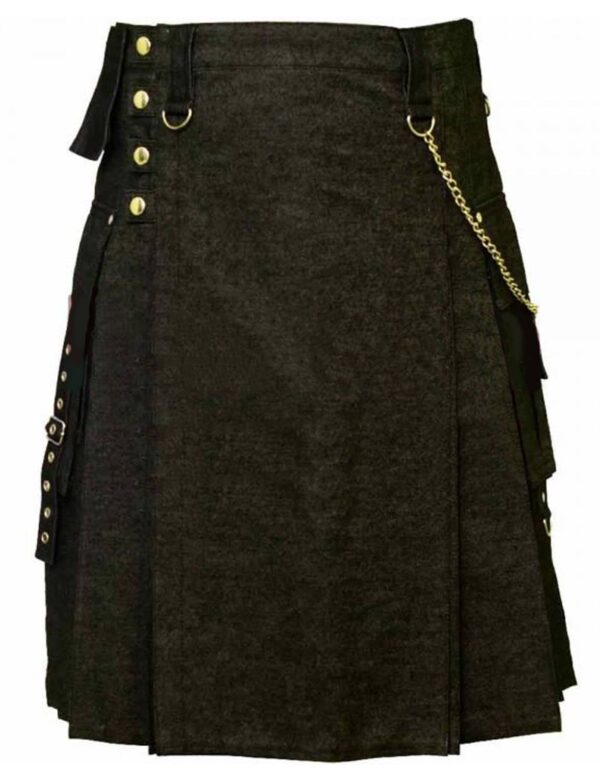
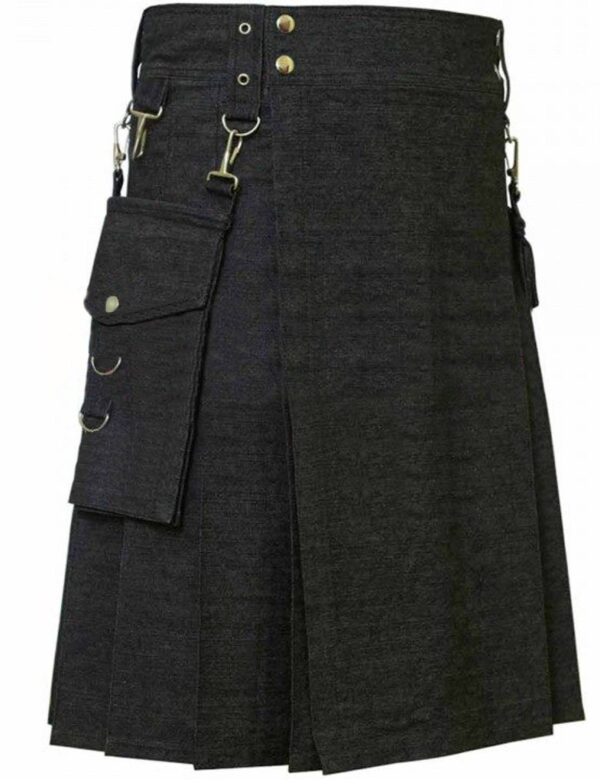
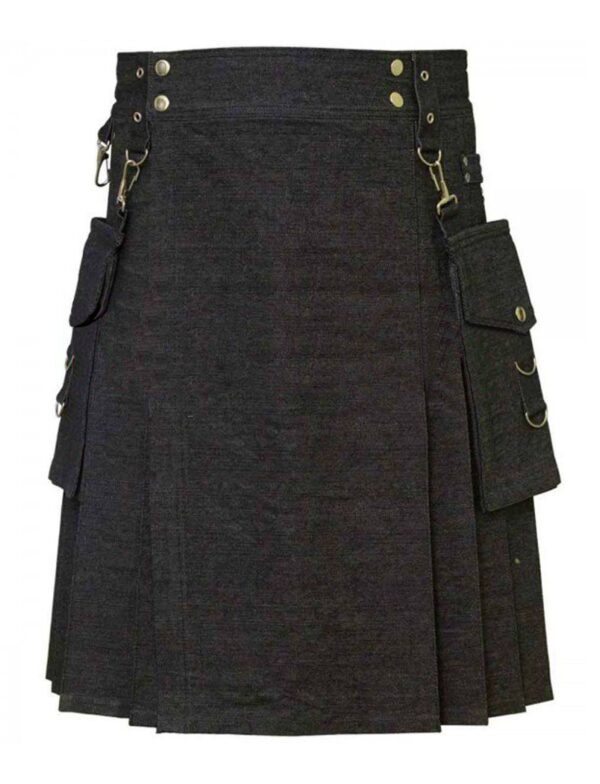
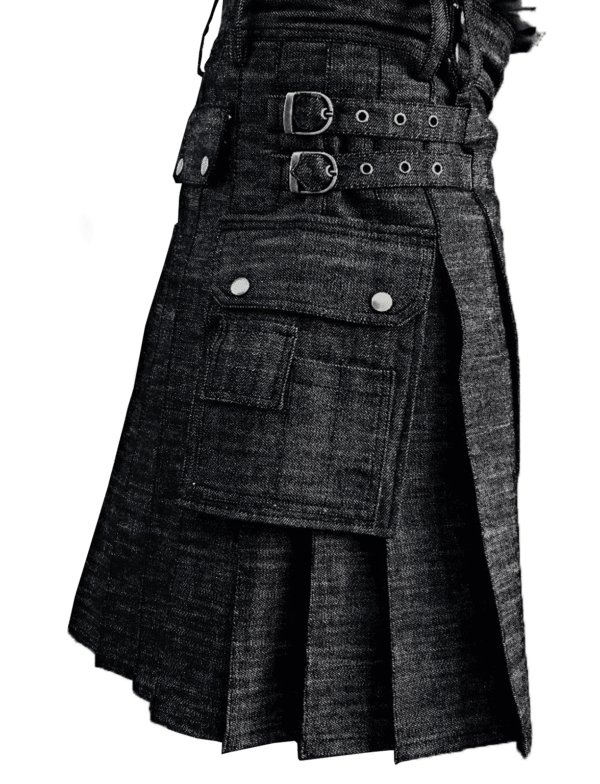
Black denim kilt. Same construction, black-dyed denim, tonal stitching. Reads darker and more urban — right for streetwear, gothic-adjacent styling that stops short of full gothic hardware, and men who wear mostly black.
Raw indigo denim kilt. Unwashed 14oz raw denim, sold stiff and dark, meant to break in to your body over months of wear. Fades where you fold, sit, and move. Right for men who own raw jeans and understand the process — the kilt version of the same commitment.
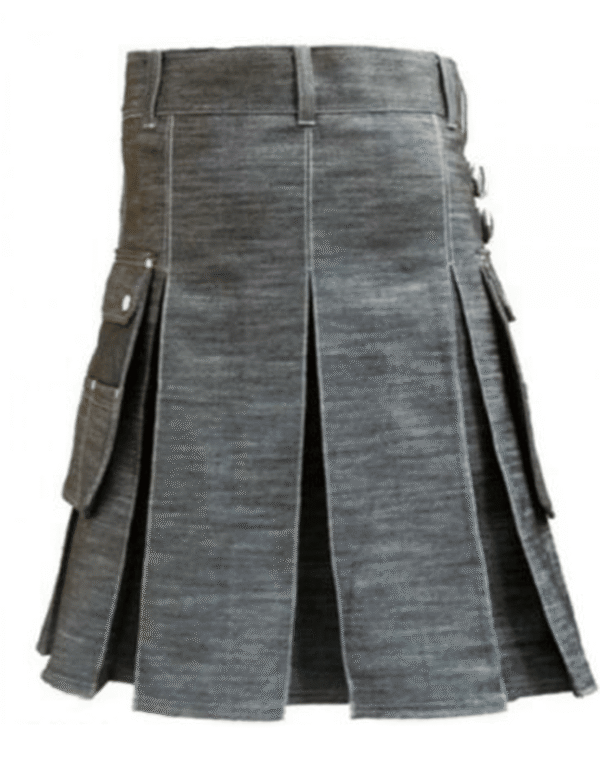
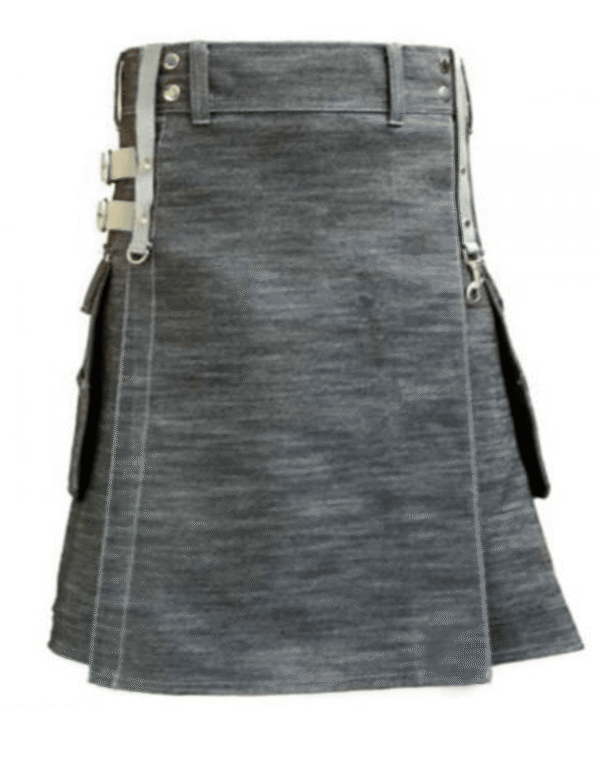
Distressed denim kilt. Pre-worn finish with fading, whiskering, and light distressing at stress points. Reads lived-in from day one. Right for men who want the aesthetic without the wait, and for festival and streetwear use where new-looking denim reads too clean.
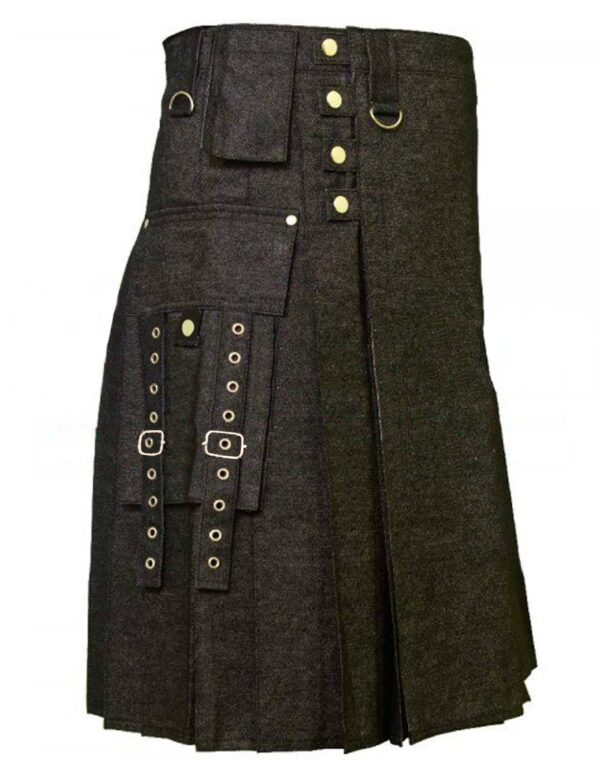
Denim utility kilt. Adds cargo pockets and functional straps to the classic denim shape. Right for daily wear where you need to carry keys, phone, and wallet without a bag — the everyday-workwear version.
Not sure which fits your use case? Message us with the context — we'd rather trade three emails now than remake a kilt in six weeks.
Choosing your denim kilt
Choose by weight first, wash second, style third. For warm-weather daily wear, 10oz classic blue or black. For year-round rotation and the best balance of structure and comfort, 12oz in any style. For men who own raw jeans and want the same slow-fade commitment, 14oz raw indigo. If you want cargo pockets and function, denim utility. If you want pre-worn character from day one, distressed. If you want the cleanest workwear read, classic blue. Every style pairs cleanly with boots, tees, work shirts, and jackets — denim is the most versatile kilt fabric we make.
Every denim kilt ships in ten working days, is cut and stitched by hand at our workshop, and is guaranteed to fit the measurements you sent us. If it doesn't, we remake it. See our returns policy for full terms. Denim is one of several styles of men's kilts we make — see also utility, leather, and hybrid styles.
12oz denim10, 12, or 14oz
buyer's choice
buyer's choice
10 daysCut, stitched,
shipped
shipped
Machine wash100% cotton
denim
denim
Free remakeIf the fit isn't
perfect
perfect
Frequently asked
Questions before ordering
What is a denim kilt?
A denim kilt is a kilt cut from cotton denim instead of tartan wool or leather. It keeps the wraparound silhouette of the traditional Scottish kilt — belt-fastened at the waist, hem falling to the middle of the kneecap — but replaces the woven wool with the same denim used in workwear jeans and jackets. Pleats are stitched permanently rather than hanging loose, which gives the garment a structured shape that holds up to daily wear. Denim kilts have no historical connection to Scottish Highland dress; they emerged through the American utility kilt scene in the early 2000s and are worn today for daily wear, festivals, streetwear, and casual use where a tartan or leather kilt would read too formal or too niche.
Are denim kilts machine washable?
Yes. All our denim kilts are 100% cotton and machine washable in cold water on a gentle cycle. Wash inside-out to preserve the outer face and any contrast stitching. Air dry to protect the sewn-in pleat structure — tumble drying can distort pleats and shrink the denim unevenly. For raw indigo denim specifically, delay the first wash for at least three to six months of wear to allow personal fade patterns to develop; when you do wash it, use cold water only and hang dry. Distressed and pre-washed styles can be laundered normally from day one.
Do denim kilts shrink after washing?
Sanforized denim (our 10oz and 12oz options) shrinks minimally — typically 1 to 2% on the first wash — and we account for this in the cutting. Raw 14oz denim shrinks more, usually 3 to 5%, because it hasn't been pre-washed. If you choose raw, we cut with the shrinkage allowance built in so the kilt fits correctly after the first cold wash. For all denim types, wash cold and air dry to minimise dimensional change.
What's the difference between a denim kilt and a utility kilt?
Construction is similar — same wraparound silhouette, same stitched pleats, similar reinforced belt loops. The differences are fabric and read. A utility kilt is cut from solid-colour heavy cotton canvas in black, olive, khaki, or grey, and reads workwear or tactical. A denim kilt is cut from cotton denim in blue, black, or raw indigo, and reads casual, familiar, and workwear-adjacent in the way jeans do. Denim also fades and softens with wear in a way canvas doesn't — that's part of the point. If you want the kilt to develop personal character over years, denim. If you want a plain matte colour that stays uniform, see our utility kilts.
How do you style a denim kilt?
The core outfit is boots, tee, and denim kilt — the same skeleton as jeans and a tee, restructured. For casual daily wear — plain white or grey tee, leather boots or clean sneakers, and a denim or work jacket on top for cooler weather. For festival and streetwear — graphic tee, chunky sneakers or boots, and a hoodie or bomber jacket. For a workwear look — flannel shirt or henley, tan work boots, and a canvas or waxed cotton jacket. For gigs and alternative styling — black band tee, heavy boots, and a leather jacket. Avoid pairing denim kilts with traditional Highland accessories (sporran, sgian dubh, ghillie brogues) — the two visual languages don't overlap.
Can I wear a denim kilt every day?
Yes — daily wear is the exact use case denim kilts were built for. Cotton denim breathes, softens with use, and holds up to years of rotation without ceremony. 12oz is the right weight for year-round daily rotation. Machine washability means you don't need to plan around dry cleaning. Belt loops carry a regular leather belt or workwear belt. The stitched-in pleats hold shape through walking, sitting, and movement without needing to be pressed. If you've worn jeans for twenty years, the maintenance rhythm of a denim kilt is identical.